- +62 (0)-813-2333-8299
- jalanjalansebentar.09@gmail.com
- Pasar Malam - Gili Trawangan
Snorkeling can look easy when you watch other people doing it. Put on a mask, breathe through a snorkel, kick your fins, and enjoy the underwater view.
But your first time can feel a little different.
You may need some time to get used to breathing through your mouth, keeping your face underwater, or moving with fins. The ocean can also feel very different from a swimming pool, especially when there are waves or currents.
The good news is that snorkeling does not have to be complicated. With the right preparation and a few simple habits, beginners can enjoy their first snorkeling experience with much more confidence.
Here are 10 snorkeling tips for beginners to keep in mind before getting into the water.
If this is your first time snorkeling, don’t feel pressured to immediately swim far from the boat or shore.
Spend a few minutes getting comfortable with the water. Let your body adjust to the temperature and practice floating while wearing your mask and fins.
If you’re snorkeling from a boat, you can also stay close to the boat at first and get used to the equipment before exploring further.
There is no need to rush. Feeling comfortable in the water is more important than covering a large area.
One of the strangest things for first-time snorkelers is breathing through a tube while keeping the face underwater.
Before swimming away, take a few slow breaths through the snorkel while floating near the boat or shore.
Try to keep your breathing relaxed and steady. Avoid taking very quick breaths just because you are underwater.
If water gets into the snorkel, don’t panic. Lift your head if necessary, clear the water, and try again.
After a few minutes, breathing through the snorkel will usually start to feel much more natural.
A leaking mask can quickly turn an enjoyable snorkeling trip into an uncomfortable one.
Before entering the water, check that the mask sits comfortably against your face. The strap should hold the mask securely without being unnecessarily tight.
You can also test the seal before swimming away. A properly fitted mask should stay in place without requiring you to constantly adjust it.
If your mask keeps leaking, tell your guide and ask for help. A small adjustment or a different mask can make a big difference.
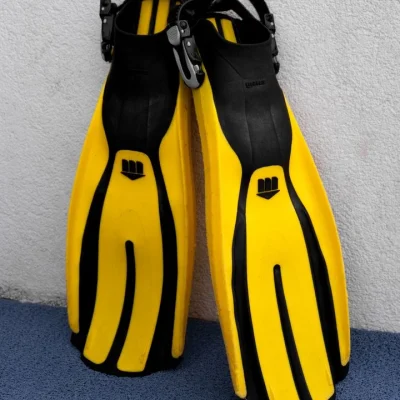
Fins make swimming more efficient, but beginners sometimes kick too hard when they first put them on.
Instead of making fast movements with your knees, try using slow and steady movements from your legs and hips.
You don’t need to kick constantly. Once you find a comfortable rhythm, you’ll be able to move through the water while using less energy.
This is especially useful when snorkeling for a longer period.
If you’re snorkeling for the first time, your guide is one of your most useful resources.
Before entering the water, listen to the briefing about the snorkeling area, currents, entry points, and any specific instructions.
Once you’re in the water, stay within a comfortable distance of your guide or group.
Ocean conditions can change, and a location that looks calm from the surface may have stronger currents in certain areas.
You don’t need to prove that you can swim far. Stay within your limits and follow the instructions of your guide.
One of the most important snorkeling habits is simple: look, but don’t touch.
Corals are living organisms and can be damaged by contact with hands, fins, or other equipment. Even a small amount of careless contact can break fragile coral.
The same applies to fish, turtles, rays, and other marine animals.
Don’t chase them or try to touch them for a photo. Give them enough space to move naturally.
Snorkeling becomes much more enjoyable when you treat the underwater environment as a place to observe rather than something to interact with physically.
It’s easy to forget about the sun when you’re floating in the water.
You may not notice how much sun you’re getting while concentrating on the underwater scenery, but your back, shoulders, legs, and other exposed areas can still receive plenty of sunlight.
Apply sunscreen before going out and consider wearing a rash guard or other sun-protective clothing.
If you’re visiting a sensitive marine environment, choosing a reef-conscious sunscreen and avoiding unnecessary sunscreen runoff can also be part of being a responsible traveler.
And don’t forget to drink enough water. Spending time in the sun and sea can leave you dehydrated even when you don’t feel particularly thirsty.
You don’t have to be an excellent swimmer to enjoy snorkeling, but you should always be honest about your swimming ability and comfort level.
If you feel tired, uncomfortable, short of breath, or anxious, let your guide know.
Don’t try to keep up with stronger swimmers just because they are moving farther away.
Many snorkeling locations offer flotation equipment, and beginners can use it to feel more comfortable in the water.
Remember that there is no shame in taking a break or returning to the boat. Your goal is to enjoy the experience safely.
Taking underwater photos is a great way to remember your trip, but don’t let the camera become the entire experience.
Your first snorkeling trip is also about seeing the underwater world with your own eyes.
Take a few photos when you can, then put the camera away and simply look around.
You might notice small fish hiding around coral, different colors beneath the surface, or the way sunlight moves through the water.
Sometimes the moments you don’t photograph become the ones you remember most.
The briefing before snorkeling may seem like a routine part of the trip, but it’s worth paying attention to.
Your guide may explain where to enter the water, where to stay, how strong the current is, where the boat will be positioned, and what to do if you become separated from the group.
Every snorkeling location is different.
Following the briefing helps you understand what to expect before you get into the water and can make the entire experience more relaxed.
You don’t need a huge amount of equipment for a snorkeling trip. Most tour operators provide basic snorkeling equipment such as a mask, snorkel, and fins.
However, it’s useful to bring a few personal items:
If you’re joining a boat trip, check with the operator beforehand to find out exactly what equipment is included.
This is one of the most common questions beginners ask.
The answer depends on your swimming ability, the conditions, and the snorkeling location.
Some beginners are comfortable snorkeling with a life jacket or flotation device, while others may prefer staying in shallow water or close to the boat.
If you aren’t confident in the water, tell your guide before you start. They can explain the conditions and help you choose the safest way to participate.
Never pretend to be a stronger swimmer than you are.
For most people, the basic technique is relatively simple.
The first few minutes are usually the biggest adjustment. You need to become comfortable with the mask, breathing through the snorkel, floating, and moving with fins.
Once those things become familiar, snorkeling can feel surprisingly easy.
The most important thing is to stay relaxed. Trying to swim too quickly or panicking when something feels unfamiliar will usually make the experience more difficult.
If you only remember a few things from this article, remember these:
Stay relaxed. Stay close to your guide. Respect the marine environment. And know your limits.
Your first snorkeling experience doesn’t need to be perfect.
You may struggle with your mask, kick your fins the wrong way, or spend the first few minutes figuring out how to breathe through the snorkel. That’s completely normal.
The more comfortable you become, the more you’ll be able to focus on what’s underneath you.
And that’s really the best part of snorkeling: slowing down, floating on the surface, and seeing a completely different world beneath the water.
If you’ve never tried snorkeling before, there’s no better way to learn than by getting into the water and experiencing it for yourself.
For first-time snorkelers, the Gili Islands in Lombok can be a great place to start. Gili Trawangan, Gili Air, and Gili Meno offer a variety of snorkeling spots where you can enjoy clear water, colorful marine life, and coral reefs while getting used to being in the water.
Once you feel more comfortable snorkeling, you can take your experience further by exploring Taman Nasional Komodo. Depending on the itinerary and sea conditions, snorkeling trips around Komodo can take you to places such as Manjarite, Taka Makassar, and Manta Point, where you can experience a different side of Indonesia’s underwater world.
Whether you start with the Gili Islands or head straight to Komodo, take your time, listen to your guide, and stay within your comfort level. Snorkeling isn’t about how far you can swim or how much you can see in one day. It’s about enjoying the experience and discovering the world beneath the surface.
Ready to give snorkeling a try? Start with the Gili Islands or explore a Komodo snorkeling trip for your next adventure.
